Genetic architecture of MRI-derived cervical spinal cord morphology reveals sensory-motor axis and systemic disease associations
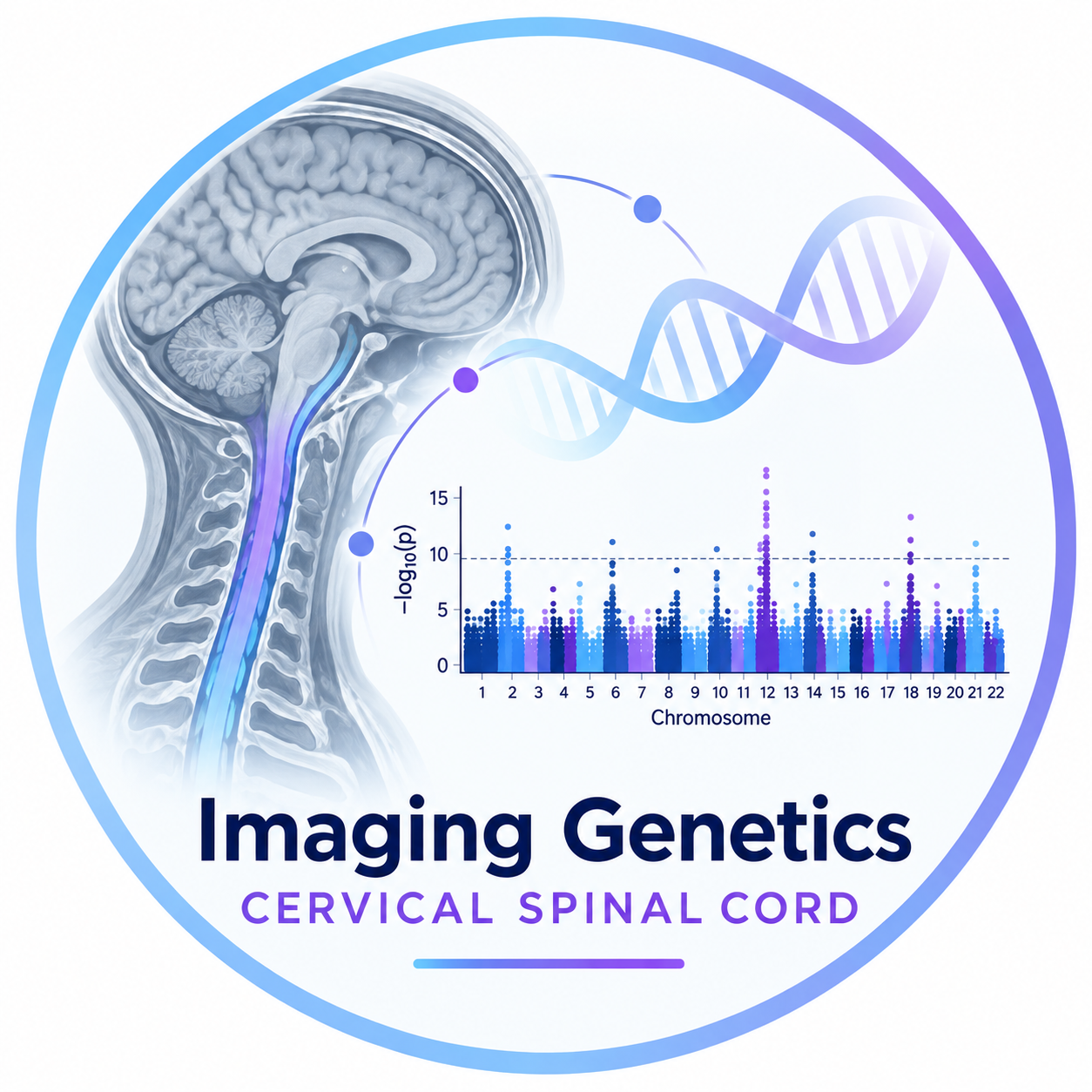
The spinal cord is critical to motor, sensory, autonomic function, and increasingly implicated in neurological disease and human health, yet its genetic architecture remains largely unexplored. We perform large-scale phenotyping of the upper cervical spinal cord (C1-C3) structure using brain magnetic resonance imaging from over 80,000 UK Biobank participants, extracting shape metrics including cross-sectional area, diameters, and eccentricity. We identify a total of 179 independent genome-wide significant variants, with cervical spinal cord morphology showing moderate to high SNP-based heritability (0.16 to 0.42). We also uncover sex-specific genetic signals, highlighting potential biological sex differences in spinal cord development. In addition, spinal cord structure is associated with a wide range of neurological, metabolic, and systemic conditions, such as multiple sclerosis, neuropathies, diabetes, and attention-deficit/hyperactivity disorder. These findings establish the cervical spinal cord as a genetically informative and health relevant structure, offering opportunities to study its role in disease mechanisms and human health.
Citation
@article{sun#2026,
  author = {Sun\#, Zhuopin and Han\#, Jiru and F. Gerring, Zachary and
    E. Jackson, Victoria and G. Bhalala, Oneil and M. Jarola, Gustavo
    and H. Harding, Ian and J. R. Rezende, Thiago and Bahlo, Melanie},
  title = {Genetic Architecture of {MRI-derived} Cervical Spinal Cord
    Morphology Reveals Sensory-Motor Axis and Systemic Disease
    Associations},
  journal = {Nature communications},
  date = {2026-09-16},
  url = {https://doi.org/10.1038/s41467-026-77419-x},
  doi = {10.1038/s41467-026-77419-x},
  langid = {en},
  abstract = {The spinal cord is critical to motor, sensory, autonomic
    function, and increasingly implicated in neurological disease and
    human health, yet its genetic architecture remains largely
    unexplored. We perform large-scale phenotyping of the upper cervical
    spinal cord (C1-C3) structure using brain magnetic resonance imaging
    from over 80,000 UK Biobank participants, extracting shape metrics
    including cross-sectional area, diameters, and eccentricity. We
    identify a total of 179 independent genome-wide significant
    variants, with cervical spinal cord morphology showing moderate to
    high SNP-based heritability (0.16 to 0.42). We also uncover
    sex-specific genetic signals, highlighting potential biological sex
    differences in spinal cord development. In addition, spinal cord
    structure is associated with a wide range of neurological,
    metabolic, and systemic conditions, such as multiple sclerosis,
    neuropathies, diabetes, and attention-deficit/hyperactivity
    disorder. These findings establish the cervical spinal cord as a
    genetically informative and health relevant structure, offering
    opportunities to study its role in disease mechanisms and human
    health.}
}